No items found in your cart!
No items found in your cart!
 you definitely can not afford to miss this. READ HERE https://www.food.goglowonline.com/view-post.php?post_id=198, Thanks for always taking out time to read through our blog posts @ Goglow Limited! We are Happy that you enjoy it!&image=<img src='https://www.food.goglowonline.com/upload/17869653261786963968889.png'/>) |
|
|
|
 you definitely can not afford to miss this. READ HERE https://www.food.goglowonline.com/view-post.php?post_id=198, Thanks for always taking out time to read through our blog posts @ Goglow Limited! We are Happy that you enjoy it!&image=<img src='https://www.food.goglowonline.com/upload/17869653261786963968889.png'/>) |
|
|
|
Food has always evolved with society. From traditional farming and food preservation to supermarkets, restaurants, refrigeration and global food supply chains, technology has continually changed how we produce, buy, prepare and consume food.
Today, however, the transformation is happening faster than ever.
Smartphones can bring meals to our doorstep within minutes. Artificial intelligence can help farmers predict crop diseases and optimize harvests. Smart kitchen appliances can automate cooking. Food apps can help people monitor nutrition and discover new meals. Scientists are developing cultivated meat and other alternative proteins, while agricultural technologies are helping farmers produce more food with fewer resources.
The future of food is no longer simply about what we eat. It is increasingly about how technology determines what is grown, how it is prepared, how it reaches us and how we make decisions about nutrition.
For consumers, businesses and farmers, this technological revolution could fundamentally reshape the global food system.
One of the most visible changes in the food industry is the growth of digital food delivery.
Instead of visiting a restaurant, customers can browse menus, place orders, make payments and track deliveries directly from their smartphones.
Food delivery platforms have transformed restaurants from businesses that primarily serve people within their immediate neighborhoods into businesses capable of reaching customers across much larger areas.
Modern food delivery systems increasingly rely on:
These technologies can help reduce delivery times, minimize operational errors and improve the customer experience.
Artificial intelligence can also analyze factors such as traffic, weather, delivery demand and driver availability to help determine efficient delivery routes.
For businesses like GOGLOW FOOD, technology creates an opportunity to connect customers with food more conveniently while improving the efficiency of ordering and delivery operations.
The future could bring even more automation.
Restaurants and delivery companies are experimenting with technologies such as delivery robots, autonomous vehicles and advanced logistics systems. In some markets, drones are also being tested for specific delivery applications.
The goal is not simply to deliver food faster. It is to create a food delivery ecosystem where ordering, payment, preparation, dispatch and delivery work together seamlessly.
The kitchen of the future may look very different from the traditional kitchen.
Smart appliances are already becoming increasingly common, including:
These appliances can connect to smartphones and other devices, allowing consumers to monitor or control certain cooking processes remotely.
Imagine a refrigerator that recognizes that you are running low on certain ingredients and creates a shopping list automatically.
Or imagine an oven that can identify the type of food being prepared and recommend an appropriate cooking temperature and time.
This is the direction in which smart kitchens are moving.
Artificial intelligence could make these systems even more useful.
An AI food assistant could potentially consider:
It could then suggest recipes and provide step-by-step cooking instructions.
For busy families and professionals, this could make meal planning significantly easier.
The smartphone has become one of the most important tools in the modern food ecosystem.
Consumers can now use apps to:
This means technology is increasingly influencing food choices before consumers even enter a restaurant or supermarket.
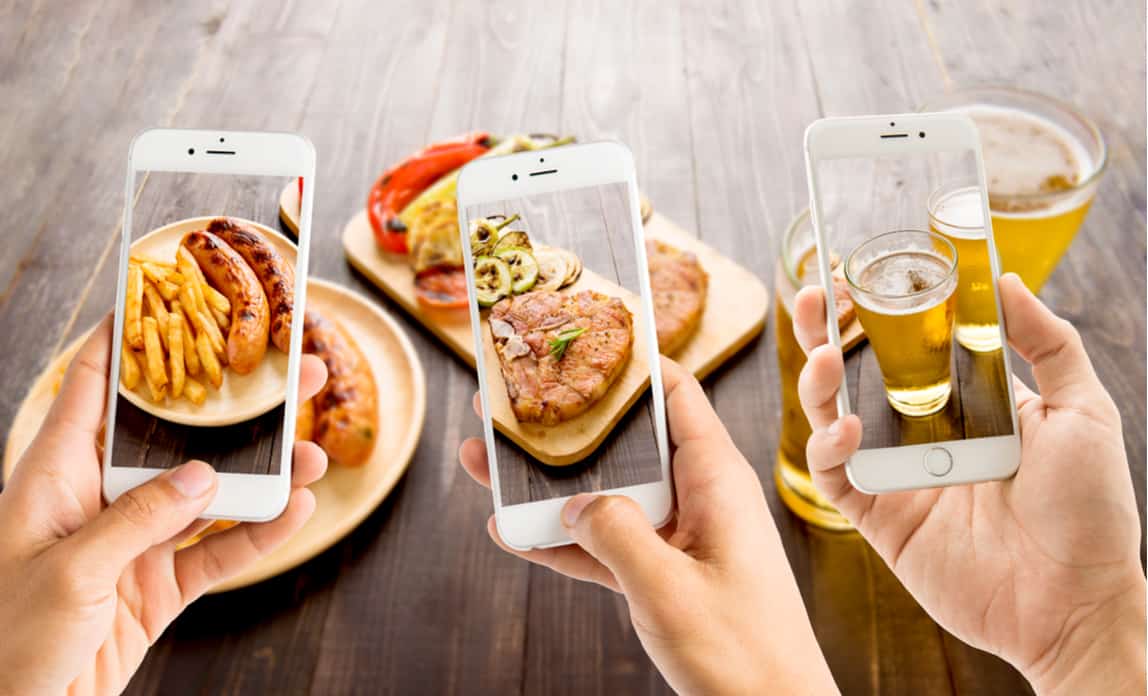
A person may see a meal on social media, search for its nutritional information, find a nearby restaurant selling it, place an order through an app and pay digitally—all without making a phone call.
Food technology is also becoming more personalized.
Instead of recommending the same meals to everyone, digital platforms can use information about consumer behavior to suggest products and meals that may be more relevant to individual users.
This could eventually lead to highly personalized food experiences.
However, consumers must also remain conscious of how their data is collected and used. Personalization can be convenient, but privacy and responsible data management will become increasingly important as food technology becomes more sophisticated.
Artificial intelligence is one of the technologies with the potential to have the greatest impact on food.
AI can analyze enormous amounts of data much faster than humans can. This makes it useful across different stages of the food supply chain.
Restaurants can use data-driven systems to understand:
This can help businesses make better operational decisions.
Food manufacturers can also use AI to monitor production processes, identify quality problems and improve efficiency.
AI-assisted systems could help detect inconsistencies in food products before they reach consumers.
Food safety is another important area.
Advanced technologies can potentially help monitor temperature, storage conditions, contamination risks and other factors throughout the food supply chain.
The result could be a more transparent and responsive food system.
One of the most discussed developments in food technology is cultivated or lab-grown meat.
Cultivated meat is produced by growing animal cells in controlled environments rather than raising and slaughtering an entire animal.
The technology is still developing, and questions remain around cost, scalability, regulation, consumer acceptance, nutrition and environmental impact.
Nevertheless, it represents an important attempt to rethink how meat can be produced.
Instead of asking only:
"How can we produce more animals for food?"
scientists are asking:
"Can we produce the food people want using a fundamentally different production system?"
If cultivated meat becomes affordable and scalable, it could eventually become another option within the global protein market.
Cultivated meat is only one part of a much larger movement toward alternative proteins.
Food companies and researchers are exploring:
The motivation varies.
Some consumers are interested in reducing their environmental footprint. Others are interested in nutrition, food security, animal welfare or simply trying new foods.
The future food market is therefore likely to become more diverse rather than being dominated by one type of protein.
Perhaps the most important technological transformation is happening before food reaches the kitchen.
It is happening on farms.
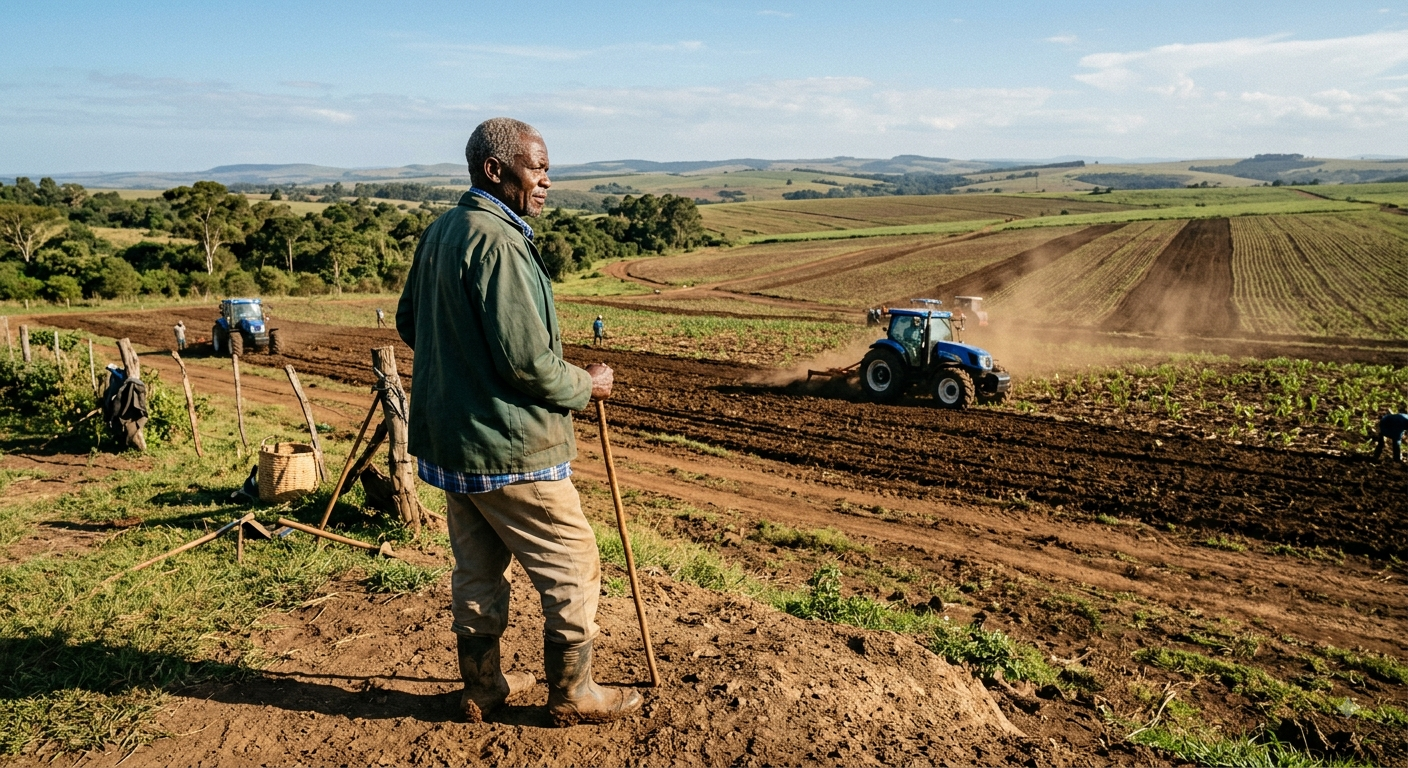
Agriculture is increasingly adopting digital technologies designed to help farmers produce more efficiently.
These include:
Traditional farming may treat a large field relatively uniformly.
Precision agriculture takes a different approach.
Technology can collect information about different parts of a farm and help farmers determine where crops need more water, fertilizer or attention.
This can reduce unnecessary resource use while potentially improving productivity.
Drones can capture aerial images that help farmers monitor large areas of farmland.
They can potentially assist with identifying:
Instead of manually inspecting every part of a large farm, farmers can use technology to identify areas that require closer attention.
Labor shortages and increasing agricultural demand are encouraging interest in agricultural robotics.
Robots could eventually perform tasks such as:
Robotic systems can work with high levels of consistency and, in some applications, operate for extended periods.
This does not necessarily mean that farmers will disappear.
Instead, the farmer of the future may increasingly become a manager of technology, data and automated systems.
Another important development is controlled-environment agriculture.
Vertical farms grow crops in controlled indoor environments, sometimes using stacked growing systems.
These facilities can carefully control factors such as:
Hydroponic and other soilless growing systems can also reduce the need for conventional agricultural land in certain applications.
One potential advantage is that food can be produced closer to consumers, reducing some of the distance between farms and urban populations.
However, vertical farming also faces challenges, including energy costs, capital requirements and the economics of producing different crops indoors.
It is therefore likely to complement traditional agriculture rather than completely replace it.
Food waste is one of the major challenges facing the global food system.
Technology can help tackle waste at several levels.
Restaurants and supermarkets can use data to predict demand more accurately and avoid purchasing significantly more food than they can sell.
Smart inventory systems can monitor stock levels and expiration dates.
Food delivery platforms can also use data to better understand demand patterns.
For households, food apps can provide reminders about expiring products and suggest recipes based on ingredients already available.
The future of food should not only focus on producing more food.
It should also focus on wasting less of the food we already produce.
Consumers increasingly want to know where their food comes from.
Technology can make food supply chains more transparent.
Digital traceability systems can potentially record information about products as they move from farms and manufacturers to distributors, retailers and consumers.
Blockchain technology has also been explored as a way of creating tamper-resistant records within supply chains.
For food businesses, traceability can support:
Imagine scanning a QR code on a food package and seeing information about where the product originated, when it was processed and how it moved through the supply chain.
That level of transparency could become increasingly common.
Another emerging technology is 3D food printing.
Instead of manufacturing objects from plastic or metal, food printers can deposit edible ingredients layer by layer to create specific shapes and structures.
The technology is still relatively niche, but it could have interesting applications.
For example, 3D food printing could potentially be used for:
In the long term, it could contribute to highly customized food experiences.
The future of food may also involve a move away from generalized nutrition recommendations toward more individualized approaches.
Digital health technologies, wearable devices and nutrition applications can collect information about eating patterns and other lifestyle factors.
In the future, advances in technology could allow food recommendations to become increasingly personalized.
Instead of simply asking:
"What is healthy food?"
people may increasingly ask:
"What food is most appropriate for my individual nutritional needs and lifestyle?"
However, personalized nutrition should be approached carefully. Technology should complement qualified nutritional and medical guidance rather than replace it.
Technology is also changing how people buy food.
Traditional supermarkets are increasingly being complemented by:
Consumers may eventually be able to manage much of their household food supply digitally.
A smart household could monitor frequently purchased products, predict when supplies are running low and recommend what should be reordered.
The supermarket may therefore become less about physically browsing shelves and more about combining physical and digital shopping experiences.
With all this technology, an important question remains:
Will technology replace traditional food?
Probably not.
Technology will change the food system, but culture will continue to matter.
People will still value:
Technology may change how these experiences are delivered, but it does not necessarily eliminate the human connection surrounding food.
In fact, technology could help traditional food reach new audiences.
A local Nigerian food business, for example, can use social media, e-commerce, digital payments and food delivery platforms to introduce traditional dishes to customers who may never have encountered them before.
Africa has an enormous opportunity to participate in the future of food technology.
With a growing population, expanding cities, increasing smartphone adoption and evolving consumer expectations, technology can help African food businesses become more efficient and accessible.
Businesses can leverage digital platforms to:
For Nigerian food businesses in particular, digital transformation can help bridge the gap between traditional food culture and modern consumer expectations.
The opportunity is not simply to copy food technology models from other countries.
Africa can develop solutions designed around its own realities, including local food systems, transportation challenges, payment preferences, agricultural conditions and consumer behavior.
Despite its enormous potential, technology is not a magic solution.
The future food system will face important challenges.
Advanced technologies can be expensive to develop and implement.
Technology should not create a food system that only wealthy consumers can afford.
Food apps and smart devices may collect significant amounts of personal information.
New technologies such as cultivated foods require appropriate safety standards and regulatory frameworks.
Automation may change the nature of jobs across agriculture, manufacturing, restaurants and delivery.
People may be hesitant to embrace foods produced using unfamiliar technologies.
Not every technology is automatically sustainable. Energy consumption, electronic waste, manufacturing and resource requirements must also be considered.
The future of food must therefore be innovative, but also responsible.
Imagine waking up in the future.
Your smart kitchen knows which ingredients are available. An app recommends breakfast based on your preferences. Your groceries are automatically reordered when supplies become low.
Farmers use sensors, satellites and AI to monitor crops. Robots assist with harvesting. Food moves through digitally monitored supply chains.
At lunchtime, you order a meal through a food app. AI helps optimize the delivery route. Your meal arrives at your location while its supply-chain information remains digitally traceable.
Meanwhile, scientists continue developing new sources of protein and nutrition.
This may sound futuristic, but many individual pieces of this system already exist.
The real transformation will come from connecting them.
Technology is transforming almost every stage of the food journey—from farm to factory, kitchen to restaurant, supermarket to smartphone and producer to consumer.
Artificial intelligence can improve decision-making. Food delivery technology can make meals more accessible. Smart kitchens can simplify cooking. Food apps can personalize experiences. Alternative proteins can expand food choices. Agricultural technology can help farmers use resources more efficiently. Digital traceability can improve transparency.
But technology should never make us forget what food fundamentally represents.
Food is nourishment.
Food is culture.
Food is community.
Food is business.
And food is one of the strongest ways human beings connect with one another.
The most exciting future may therefore not be a world where technology replaces traditional food, but one where technology helps us produce better food, waste less, reach more people and make the food system more efficient and sustainable.
For consumers and businesses alike, the message is clear:
The future of food is already being built—and technology is becoming one of its most important ingredients.
At GOGLOW FOOD, we believe the future of food should combine quality, convenience, innovation and trust.
As technology continues to transform the way people discover, purchase and enjoy food, food businesses must be prepared to evolve with their customers.
From digital ordering and delivery to smarter food production and better customer experiences, the food industry is entering a new era.
The question is no longer whether technology will change food.
It already has.
The bigger question is:

.jpeg)

 Categories
.jpeg)
.jpeg)